



The Man Who Fooled Dickens
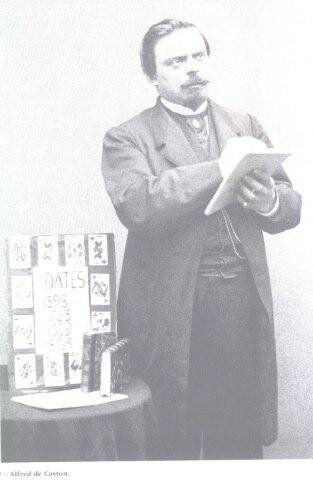
It was Dickens’s first biographer, John Forster, who told us about the one conjurer who had fooled Dickens. Dickens wrote about him that he was “so far as I know a perfectly original genius, and that puts any sort of knowledge of legerdemain, such as I supposed that I possessed, at utter defiance.”
Unfortunately, whilst telling us that Dickens had seen him in 1854 at a French Army Camp near Boulogne (this was at the time of the Crimea War) and describing in some detail the tricks that he did, Forster does not mention the conjurer’s name.
This fuelled great speculation in the magic press as to who it might possibly be. Candidates such as Robert-Houdin and Bartolomo Bosco were postulated. Indeed the latter was written up as being the magician concerned by Simon Callow in his Charles Dickens and the Great Theatre of the World when published in 2012.
In fact the correct conjurer was revealed back in March 1931 and published in The Magic Circular, the in-house magazine of The Magic Circle, by Frank Staff. He found out he was a man called Alfred de Caston by tracing a mention of him in the Autobiography, Memoir and Letters of Henry Chorley.
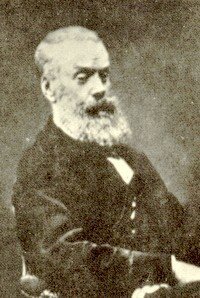 Chorley was an eclectic writer and perhaps best known as a music critic. He is specially remembered for his obituary of Turgenev, principally as it was written whilst the Russian was still alive! He does however detail a performance by Chevalier de Caston (as he calls him) which clearly comes from the same repertoire of tricks as is described by Dickens. Chorley writes in a footnote: “This Chevalier de Caston, by the way, was the only professor of his art who succeeded in puzzling Charles Dickens, himself a consummate and experienced conjurer.”
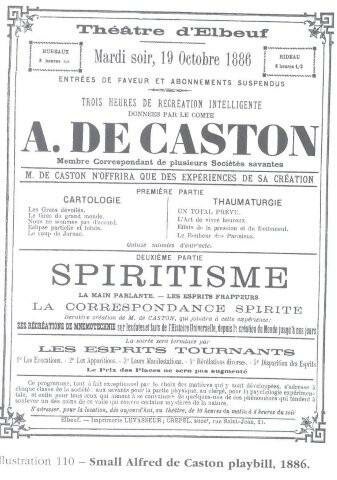 So far, so good detective work. But sadly information about Alfred de Caston is rather lacking; which is a pity because he was clearly a brilliant and intriguing man. Conjuring appears to have been more of a hobby than a profession for him. His real name was Antoine Aurifeuille and he once earned a living teaching high-school mathematics in Toulouse. He was clearly an exceptional mathematician because he has a mathematical theorem named after him, known as the aurifeuillian factorization theorem (a way of calculating how one very large number is the product of two smaller numbers).
He wrote several books, some connected with magic, including one on CardSharping, and others on travelling, which seemed to be his first love; as all of them are in French I have been unable to read any myself. His most famous book Les Marchands de Miracles: Histoire de la Superstition Humaine, 1864, is still in print.
Easily the best description of his act is that from Dickens who not only details his tricks but also some of the patter he used. Essentially it would appear that Dickens was fooled by a combination of psychological ‘hits’ (his wife was asked to name an animal and a flower – she went for a lion and a rose – which de Caston had predicted); together with some work with some slates in which messages appeared on them (a favourite trick of spiritualists).
 The reason why Dickens was so fooled I think comes down to the fact that he had never encountered this type of magic before. His own performing was very much 'apparatus based' – his magical influences were street performers and prop-based theatrical performers such as Ludwig Dobler and Professor Anderson.
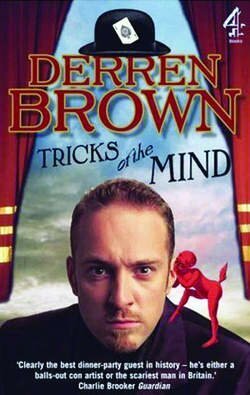
De Caston was clearly way ahead of his time with the use of what we would now call mentalism, popularised these days of course by Derren Brown; in retrospect it really is not that surprising that Dickens was so badly taken in.