



Background To The Show
Dickens The Conjuror
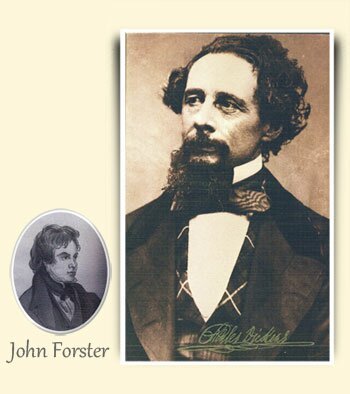 Dickens first started performing magic in 1842, at the age of thirty, when he, with his great friend and first biographer, John Forster, bought the "entire stock of a conjuror's trade". He entertained at private parties and Christmas celebrations for friends and family. Contemporaries praised him for his skills, Jayne Carlyle saying that Dickens "was the best conjuror I have ever saw - and I have paid money to see several".
In his role as a magician he billed himself as 'The Unparallelled Necromancer, Rhia Rhama Roos' and did popular Victorian tricks such as baking a pudding in a gentleman's hat and transforming some bran into a live guinea pig.
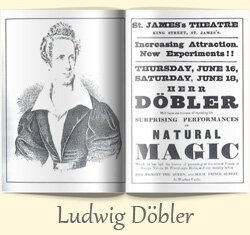
He saw many of the top conjurers of the day, including Ludwig Döbler (who influenced Dickens to take up magic) and Professor John Henry Anderson (otherwise known as the Wizard of the North, a title which he claimed was bestowed on him by the writer Walter Scott). Dickens wrote that he had made improvements in his own repertoire of tricks which made them "as good as Döbler and better than the Wizard of the North".
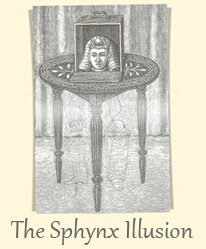
Another magician he saw was Colonel Stodare performing his famous 'talking head' Sphinx illusion: Dickens explained the method in a letter to his daughter.
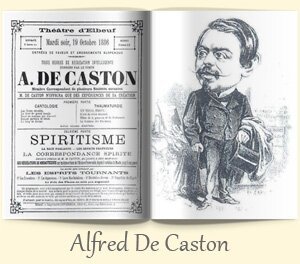
The only magician that fooled Dickens was one he saw in 1854, at a French army camp in Boulogne. He wrote about him that he was "so far as I know a perfectly original genius, and that puts any sort of knowledge of legerdemain, such as I supposed that I possessed, at utter defiance." The magician was Alfred de Caston, and he completely blew Dickens away with a mixture of psychological and mind reading stunts.
Dickens and Spiritualism
Spiritualist activities took off after the Fox sisters, Margaret and Katie, in America first gave public séances for money in the late 1840s; and sundry mediums rapidly exported themselves to England to extract money from the gullible public in Victorian England.
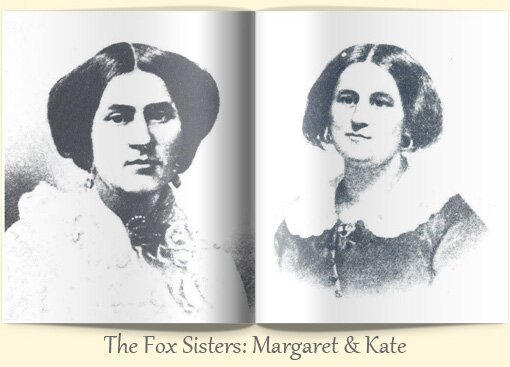
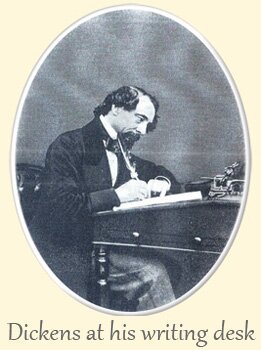
Charles Dickens was a confirmed sceptic from the start – perhaps arising from his interest in magic and his realisation how audiences can be deceived. He commissioned quite a few articles for his two magazines that he edited, Household Words and All the Year Round, where the contributors attended séances and exposed them as fraudulent.
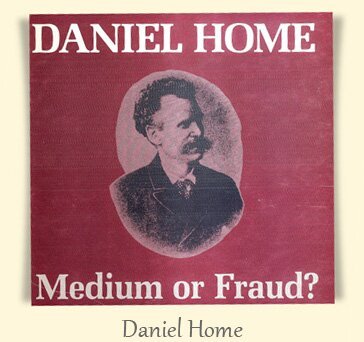
Dickens tended to be a 'stay-at-home' cynic, mocking the latest practices of spiritualists, whether it was table turning, rapping or physical manifestations; and castigating individual mediums such as Daniel Home, describing his autobiography as an "odious book"
In one article he denied being at a particular séance when the medium's manager attempted to garner publicity from his supposed attendance.
His own summary of mediums was expressed in a letter: "Although I shall be ready to receive enlightenment from any source, I must say I have very little hope of it from spirits who express themselves through mediums; as I have never yet observed them to talk anything but nonsense."
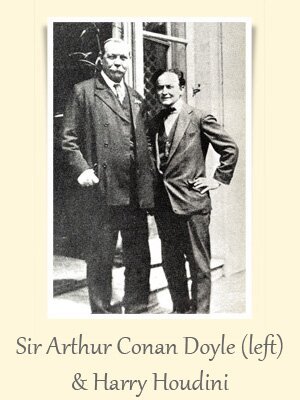
Ironically this didn't stop Arthur Conan Doyle speaking to the spirit of Dickens at a séance in 1927, fifty seven years after his death. ‘Dickens’ solved, for the creator of Sherlock Holmes’ satisfaction if not to most literary critics, what had happened to the eponymous hero in Dickens’ unfinished novel, The Mystery of Edwin Drood.
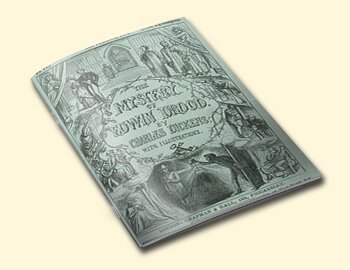 Another medium, working through Dickens, apparently completed the novel. His son wrote that "it was a sad proof of how rapidly the faculties deteriorate after death."